Detection of Heavy Metals in Water: ICP-OES, a Versatile and Highly Sensitive Technique
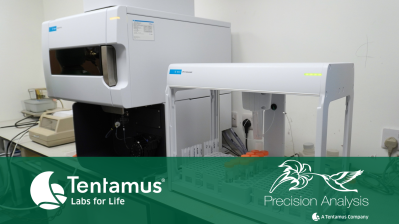
Analytical testing of water – such as drinking water, closed water systems, ground water and effluence – is an extremely important aspect of public health and a legal requirement. Neglecting to test water supplies on a regular basis can have serious consequences. Joanne Holt and Julie McCarron take a closer look at the advanced analytical technique ICP-OES, and how it can be used within water testing for regulatory compliance.
By Joanne Holt, Laboratory Manager and Julie McCarron, Director, both from Precision Analysis – a Tentamus Company (UKAS accredited testing laboratory No. 1763)
Water testing is a key aspect of public health protection and is vital for ensuring that harmful entities – such as pathogens or toxic materials – are either absent or not present in quantities likely to cause harm. In the UK, water quality – especially water that is intended for drinking (potable) – is subject to strict regulation.
The first legislative framework for control of water supplies in the UK was the Water Industry Act 1991, which was introduced to place a legal duty on water companies to supply wholesome water. In 2016 this was subject to further development, and specific limits on the chemical, microbiological and indicator parameters, including appearance and taste, at the consumer taps were introduced. Since 2000, the Water Framework Directive (WFD) has also played a key role in the development of water testing methods and implementation of strict limits for permissible levels of contamination. The primary goal of the WFD is to ensure the good health of water sources across Europe, and focusses on the health of ecosystems, for example through monitoring the water quality of inland, transitional, and coastal surface waters, as well as groundwaters.
Testing of water generally falls into one of five broad categories:
- Private water supplies, which includes boreholes, spring water and wells, rather than water provided by utility companies.
- Public tap water, which is primarily water intended for consumption and supplied by utilities companies.
- Bottled drinking water, which is classified as a food product.
- Water systems in commercial buildings, which includes drinking water as well as heating and cooling networks.
- Wastewater testing, which includes sewage, groundwater, and bathing water designations. This testing is primarily undertaken by the Environment Agency or local authority.
In this short blog post, we will focus on the testing of water for trace quantities of heavy metals, the presence of which are controlled by the Water Supply (Water Quality) Regulations 2016 that transposed the EU Drinking Water Directive (98/83/EC) and Euratom Directive (2013/51/Euratom) into UK law.
Heavy metal testing in water: what you need to know
The testing of water for heavy metals is a vital part of compliance with the chemical contamination aspect of the Water Supply (Water Quality) Regulations Act, 2016 and the Environmental Permitting (England and Wales) Regulations, 2016. This legislation applies to drinking water, discharge of water into the sewage system, and water run-off from land that is contaminated with chemical or biological agents. Several heavy metals require monitoring, including iron, copper, lead, aluminium, cadmium, chromium, arsenic and mercury.
While water quality continues to improve, there have been several high-profile instances of heavy metal contamination in the UK, which are suspected to have led to serious health issues. One of these includes the Camelford water pollution incident, where the local water supply was accidentally contaminated with twenty tonnes of aluminium sulphate, greatly exceeding permissible levels of aluminium. As well as the health effects caused by the presence of aluminium metal, as the aluminium sulphate broke down large quantities of sulphuric acid were produced, which stripped chemicals from the pipe networks, including other heavy metals such as lead and copper, leading to health consequences for those living in the area.
As well as the risk of accidental contamination – which is thankfully rare – there is a risk in certain areas of the country, such as Cornwall, that private ground water supplies, such as boreholes, contain high levels of heavy metals. For example, a recent British Geological Survey/Health Protection Agency study in Cornwall showed that 5% of the private supplies tested had concentrations of arsenic exceeding 10 mg/L, over the World Health Organisation guidelines.
How to test for metal contamination in water
Knowing the potential metal contaminants is one thing, but knowing how to test for them – and then executing the tests so results are reliable and compliant with regulations – is another matter. To measure contamination levels, bespoke scientific instrumentation is required.
Traditionally, Precision Analysis – a Tentamus Company, used atomic absorption spectroscopy (AAS), but recently we purchased an Inductively Coupled Plasma Optical Emission Spectroscopy (ICP-OES) instrument, the Agilent 5800 VDV ICP-OES Spectrometer. Both techniques – AAS and ICP-OES – can give highly-accurate and precise results, but AAS suffers from some limitations that the ICP-OES system can overcome.
Key terminology required to understand the processes
Before we discuss AAS and ICP-OES in more detail, it is important to clarify a few of the scientific concepts or terms that are exploited during these tests:
- An atom of an element is formed by fragmenting chemical compounds. This can be achieved using high temperatures, such as those in flames or plasmas.
- The ground state of an atom is when all the electrons in the atom are in the lowest possible energy levels.
- An excited state of an atom is when the electrons are still contained within the atom but are now in higher energy levels. These excited states may be labelled E1, E2, E3 etc in order of increasing energy.
- Promotion of an atom from its ground state to an excited state may be achieved through absorption of light, or by exposure to high temperatures.
- The proportion of atoms in an excited state increases as the temperature increases and may be calculated by the Maxwell–Boltzmann equation.
- An ion is formed if there is sufficient energy to remove an electron from the atom.
Atomic absorption spectroscopy: a brief overview and some limitations
AAS can give reliable quantification for a select range of elements, all of which are potential contaminants of drinking water. However, due to the way that data are collected, only one or two elements can usually be analysed at a time, requiring multiple samples to be collected and more sample materials used overall.
AAS relies upon the key principle that atoms (and ions) can absorb light at a specific wavelength. When a sample is irradiated with a specific wavelength of light, specific atoms (or ions) of a particular element absorb the light energy. The wavelength of light is varied depending on the element requiring analysis, leaving the other elements in the sample unaffected.
During AAS analysis, the sample is dissolved and sprayed into a flame that is hot enough to atomise the sample. However, it is not hot enough to promote an electron to an excited state; nearly all of the atoms remain in the ground state during this stage.
A beam of light is then shone through the flame. This light must be monochromatic and of exactly the right wavelength to be absorbed by the atoms being analysed. The absorption of energy from the beam of light causes the electrons in the atom under scrutiny to be promoted from the ground state to an excited state; usually the first energy level (E1). While promotion to other energy levels, such as E2 or E3 is possible by increasing the energy of the light, this is rarely undertaken as promotion to E1 is the most intense.
The fact that a specific wavelength is used for irradiation means that, in principle, only one element may be analysed at a time. To analyse for another element, the lamp must be changed to that with a different wavelength (corresponding to the wavelength required for that atom). However, in practise a lamp that emits several wavelengths is often used so that up to about 4 elements may be analysed at one time, before the lamp is changed.
In AAS, the wavelength of light used can therefore both be selective for a specific element and be tuned such that electrons are only promoted from the ground state to E1. The amount of absorption that occurs can then be determined through use of the Beer–Lambert law, which states that the absorbance is directly proportional to the path length and the concentration of atomic vapour in the flame enabling a concentration to be calculated.
However, while AAS is useful for identification of elements present in a sample, there are some drawbacks.
- AAS suffers from detection limits, meaning that trace quantities of an element may not be readily detected.
- Sample throughput is slower because only one or two elements can be detected per sample run.
- The flame may not be 100% stable and may vary in temperature and physical shape effectively changing the path length, although this can be overcome by very frequent calibration.
- Some elements may form oxides in the flame, and others may be ionised so that ions (elements with a charge) rather than atoms are formed. This can be overcome, for example through altering the flame temperature by using different gas mixtures, but this can make AAS more time-consuming than other techniques.
ICP-OES: a modern technique for the modern laboratory
ICP-OES is a modern alternative to AAS and works using the principle of emission rather than absorption. In ICP-OES the sample is dissolved and aspirated – but rather than using a flame, this technique uses plasma. The plasma is formed by the effect of a radio frequency on a flowing gas, usually argon in a quartz tube.
(Plasma is a superheated, ionised gas that has multiple applications with science, from making computer chips to chemical analysis. Within the spectrometer, a plasma torch generates the plasma, usually using argon gas, and the energy of the plasma is tuned using radio waves).
Effective core temperatures of 8000–10000 K are readily achieved, which is hot enough to both atomise the sample and produce a proportion of atoms in the excited state. These atoms subsequently return to their ground states and emit energy in the form of light, with each type of atom emitting light at a specific wavelength.
Operationally, the ICP-OES instrument is highly sensitive, and some elements can be detected in parts-per-billion (ppb) levels. This renders it a highly reliable technique for applications requiring both trace-level detection and bulk analysis. The instrument also supports multi-element detection, unlike AAS which usually requires an individual run for each element under investigation. This is because emission will be obtained from all the different elements in the sample simultaneously, with each element emitting at a specific wavelength. Rapid analysis and high-sample throughput are therefore possible, reducing client turnaround times while maintaining reliability.
However, ICP-OES isn’t only restricted to heavy metals. It can be used to detect metals, metalloids, and some non-metals, although a major limitation is its inability to detect certain non-metal elements, including halogens. The very high temperature of the plasma also eliminates many of the chemical interferences found in a flame, and most elements are readily excited therefore they can be detected easily. ICP-OES is also an excellent technique for elements that may form oxides in a flame such as boron, phosphorus, uranium and tungsten, and for elements that are difficult to excite such as zinc or cadmium.
Applications of ICP-OES
While this article has mainly focussed on the use of ICP-OES to detect heavy metal contamination in water, this versatile and precise technique can also be used across several other industries including:
- Environmental Testing – Monitoring water, soil, and air for heavy metals
- Industrial Quality Control – Verifying material composition in metals, geochemical samples, and at all stages of the battery lifecycle.
- Pharmaceutical and Food Safety – Ensuring compliance with regulations for contamination levels.
Precision Analysis – a Tentamus Company: offering reliable heavy metal testing and quantification services across a range of industries
At Precision Analysis – a Tentamus Company, our new, state-of-the-art ICP–OES instrument will replace our workhorse AAS, allowing us to identify and quantify heavy metal contamination more reliably and in lower concentrations than we could previously. When it comes to testing for heavy metals in water, we collect data for samples from drinking (potable) waster and closed water systems, as well as ground water and effluent samples. Initially, we will focus on testing for iron, copper, zinc, lead, aluminium, nickel, manganese, cadmium, chromium, arsenic and mercury, but magnesium, calcium, sodium and potassium capabilities will be added at a later date.
Contact us today to find out how we can support your testing needs!
Frequently Asked Questions
When testing for heavy metals in water, what tests do I need to use?
Heavy metals testing can rely on one of three primary methods: atomic absorption spectroscopy (AAS), where identification of a metal is based on energy absorption, mass spectrometry (ICP-MS), where identification of a metal is based on atomic mass, or optical emission spectroscopy (ICP-OES), where identification of a metal is based on emission of light. The limitations of AAS are discussed in the article and include slow sample throughput, detection limits, and ionisation/oxidation of samples. While mass spectrometry is excellent for trace amounts of materials (such as parts per trillion), at concentrations over 10 ppb, the usual concentration for detection of contaminants in water, the use of ICP-OES is ideal, offering rapid sample processing, and reduced risk of oxide or ion formation.
My samples are cloudy, is this an issue?
No, not at all! ICP-OES can be used to measure samples with a high percentage of dissolved solid material or suspended solid material. The instrument is highly precise in the identification of particular elements. This means that other dissolved materials are not an issue as the instrument can ‘ignore’ them.
Do I need several samples to collect data?
No, not anymore. Previously, when using AAS several samples have to be prepared as only one element could be detected at once, which was time-consuming. However, ICP-OES takes less than one minute to measure the concentration of up to 74 elements in a sample!
Why don’t you use ICP-MS?
While ICP-MS is an excellent technique for identifying elements present in samples, especially if concentrations are below 10 ppb or isotopic ratios are required, when it comes to water testing ICP-OES is more appropriate, as water contaminants are usually in concentrations were ICP-OES out-performs ICP-MS. Furthermore, ICP-OES is more amenable to cloudy samples, where there is a large amount of suspended material, or samples with a large proportion of dissolved solids. The means that the post-collection processing our scientific team need to do when preparing samples is minimised, ensuring data collected are reliable and representative.